Pearson Edexcel · A-Level · Economics B
Course version: 9EB0 · Version from Sept 2015
B) Importance of cash flow for business survival
Full specification wording
Business survival and cash flow: b) Importance of cash flow for business survival
Cash flow represents the movement of money in and out of a business over a specific period.
Checked against the Pearson Edexcel 9EB0 specification (opens in a new tab) on .
- Point 2 of 4
- 4 key terms
Study notes
From the checked teaching notes for this specification point.
The idea
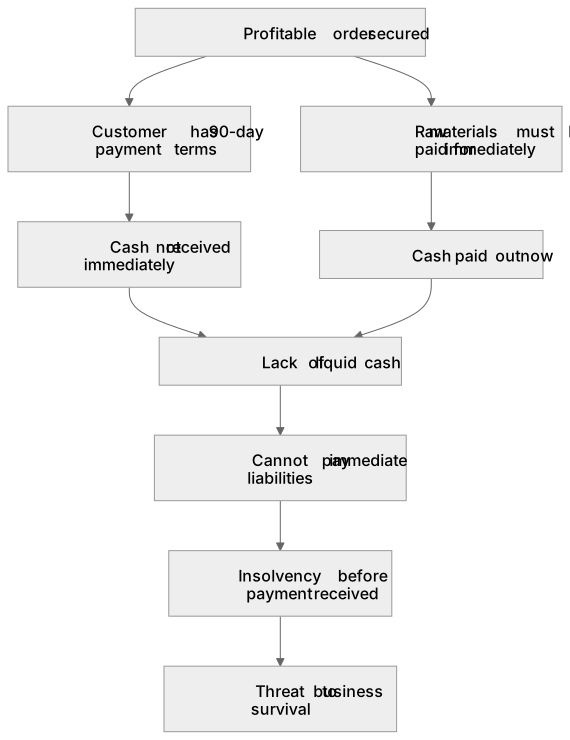
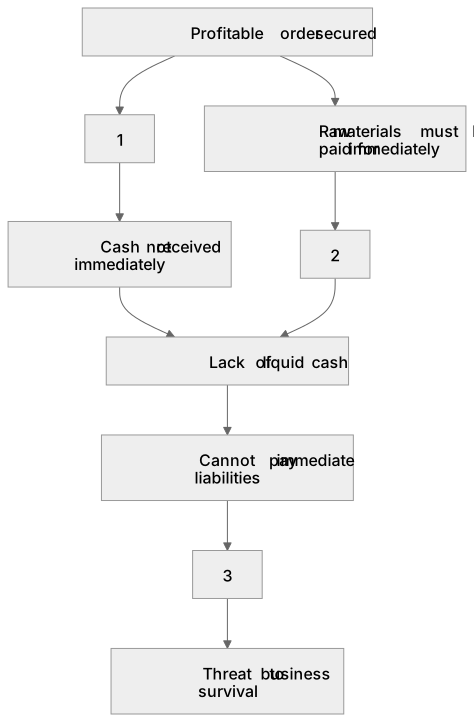
Cash flow represents the movement of money in and out of a business over a specific period. While profit is a long-term measure of success, positive cash flow is essential for day-to-day survival. A business can be profitable on paper but still fail if it lacks liquid cash to pay immediate liabilities, such as wages or suppliers. For example, a manufacturer might secure a highly profitable order, but if the customer has 90-day payment terms and the manufacturer must pay for raw materials immediately, it could face insolvency before receiving payment. Therefore, managing cash flow ensures a business can meet its short-term debts, avoiding liquidation and ensuring operational continuity.
What earns the marks
- Define cash flow as the movement of money into and out of a business over a given period of time.
- Distinguish between cash flow and profit, noting that profitable businesses can fail due to poor cash flow.
- Explain that positive cash flow is required to meet short-term liabilities like wages, rent, and supplier invoices.
- Identify that insolvency occurs when a business cannot pay its debts as they fall due, directly threatening its survival.
Common mistakes and how to put them right
Confusing cash flow with profit.
Put it right: Profit is revenue minus costs, whereas cash flow is the timing of actual cash receipts and payments.
Assuming a profitable business cannot go bankrupt.
Put it right: A profitable business can become insolvent if its cash is tied up in stock or debtors, leaving it unable to pay immediate bills.
Believing that high sales guarantee positive cash flow.
Put it right: If sales are made on credit, the cash is not received immediately, which can lead to cash flow shortages.
Exam tips
- Always distinguish clearly between cash and profit when evaluating why a business might fail in an exam scenario.
- Use the term 'insolvency' rather than 'bankruptcy' when discussing a business's inability to pay its corporate debts.
- When analysing a scenario, check the credit terms offered to customers versus those given by suppliers to identify potential cash flow problems.
Try the lesson
The start of the Business survival and cash flow: b) Importance of cash flow for business survival lesson, made from checked teaching notes for this specification point.
Have a go first
Which of the following best explains why maintaining a positive cash flow is essential for the short-term survival of a business?
Listen
Cash flow represents the movement of money in and out of a business over a specific period. While profit is a long-term measure of success, positive cash flow is essential for day-to-day survival. A business can be profitable on paper but still fail if it lacks liquid cash to pay immediate liabilities, such as wages or suppliers. For example, a manufacturer might secure a highly profitable order, but if the customer has 90-day payment terms and the manufacturer must pay for raw materials immediately, it could face insolvency before receiving payment. Therefore, managing cash flow ensures a business can meet its short-term debts, avoiding liquidation and ensuring operational continuity. A strong answer earns marks for these points. Define cash flow as the movement of money into and out of a business over a given period of time. Distinguish between cash flow and profit, noting that profitable businesses can fail due to poor cash flow. Explain that positive cash flow is required to meet short-term liabilities like wages, rent, and supplier invoices. Identify that insolvency occurs when a business cannot pay its debts as they fall due, directly threatening its survival. A common slip: Confusing cash flow with profit. Instead, profit is revenue minus costs, whereas cash flow is the timing of actual cash receipts and payments. Exam tip: Always distinguish clearly between cash and profit when evaluating why a business might fail in an exam scenario.
See it
Key words
Say what each word means before you turn the card.
Cash flow
Try answering aloud or in your head before turning the card.
Insolvency
Try answering aloud or in your head before turning the card.
Profit
Try answering aloud or in your head before turning the card.
Liquidation
Try answering aloud or in your head before turning the card.
See every definition
- Cash flow
- The movement of money in and out of a business over a specific period.
- Insolvency
- Occurs when a business cannot pay its debts as they fall due, directly threatening its survival.
- Profit
- A long-term measure of success, calculated as revenue minus costs.
- Liquidation
- The outcome avoided when managing cash flow ensures a business can meet its short-term debts.
Label the diagram
Some boxes have lost their names. Pick the right name for each number.
1Box 1
2Box 2
3Box 3
There is more to this lesson
The full lesson goes on to check your understanding and help you earn the marks. Create a free account to carry on, with your progress saved.
A week of Premium from your first lesson · Then the free plan continues · No card, no charge
Test your understanding of Business survival and cash flow: b) Importance of cash flow for business survival
Active recall beats re-reading. Take an instant quiz now to test what you’ve learned and lock it into long-term memory.
A week of Premium from your first lesson · Then the free plan continues · No card, no charge